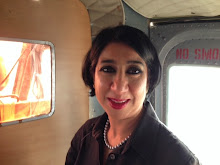
On the occasion of her 65th birthday.
Dear Daw Aung San Suu Kyi
Today you will mark yet another birthday under house arrest – cut off from your children and your family. My thoughts, and thoughts of so many people in Britain and across the world, will be with you and with the people of Burma. The injustice of your continuing detention mirrors the injustice that the regime has inflicted on your country and your people for so many years. Throughout that time, you have stood firm, at enormous personal cost, for the principles of liberty and justice. You have become a powerful symbol of the strength of the human spirit. Like my predecessor, I personally have long found your example deeply inspiring. I want to assure you that as Prime Minister, I will maintain a close interest in Burma. The British Government I lead will do all it can, both internationally, working through the United Nations, and bilaterally, to bring a brighter future for Burma and your people, in which they enjoy full human rights and true democracy. I have never forgotten your own request: that we should use our liberty to help the Burmese people to obtain theirs. I promise we will do everything we can to achieve that.
Saturday, 19 June 2010


Friday, 11 June 2010
MJ's recent piece
The many colours of red
M.J. Akbar
Red is not a single colour. By the second half of the Sixties most of the world Latin America, Africa, Asia, most of Europe was awash in its many hues, and Vietnam took its counter-intuitive edge to the campuses and television screens of America. By the late Sixties, and through the early Seventies, the Naxalite offensive had turned parts of India scarlet. The epicentre was Bengal, but the seepage was powerful enough to affect Delhi. Mrs Indira Gandhi, the most perceptive politician of the last half century, recognised its implications amidst the comfort zones into which a slothful Congress leadership had retreated. She broke the party and reinvented herself as a pink ruby in a clutter of paste diamonds.
Mrs Gandhi was astute enough to launch a major offensive against poverty, but did not have the economy to sustain her political will. Nor did she have the conviction in shared governance to build alliances within Parliament, and with industry, labour, peasantry, academia and media that could become the vanguard of change. India is too heavy a weight. It moves only when we all pull together.
That familiar adage of the freedom movement when Bengal sneezes, India gets a cold worked for the last time during the red upheaval of the Sixties. The sun rose from the east, but that sharp red streak of dawn faded quickly in the harsh sunlight of the rest of India. Bengal rejected scarlet, and dyed itself in the pale red of democratic communism, introducing a doctrine that challenged other applications of the phrase. Where the Soviet-East European model, for instance, gave primacy to communism over democracy by subverting the latter into a one-party dictatorship, Bengal became a one-party state in a cooperative electoral process that legitimised the party through election victories that might arouse scepticism, but whose credibility could not be challenged. The fulcrum of Communist rule in Bengal was social stability, which Congress had destroyed in the Sixties by cynical manipulation. The peace of the last three decades has veiled the fact that Bengal is a partition province, with a history of Hindu-Muslim antagonism that has deeper roots than Punjab. The Muslim League was born in Bengal; and Punjabi literature has nothing compared to the anti-Muslim froth that layered so much of the best Bengali writing in the 19th and early 20th centuries.
Why is the colour of Bengal swirling back towards the tricolour of India? There are many reasons, of course, including the rather obvious failure of the Left to embed itself into the consciousness of contemporary youth in the manner that it once dominated the minds of Bengali youth in the Seventies and Eighties. The young comrades who once drove a wedge into the sky kept the dream alive in their children, but have now lost their grandchildren, the teenagers who are leading the celebrations after every Mamata Banerjee victory. But there is a second, equally important, albeit unrecognised, reason for the electoral debacle.
We are used to dividing Bengal along Hindu-majority West and a Muslim-majority East, with the border as the only definition. But there is a new West and East in our Bengal. Official statistics say that the Muslim population of West Bengal is 28%; it might rise to 30% after the current census. But this demographic is not evenly distributed. Muslims are concentrated in the eastern districts of West Bengal, parallel to Bangladesh, forming about 40% of the voting population in the thickly populated regions south, east and north of Calcutta. Any map of the results will show that the core reason for Mamata Banerjees success lies in the shift of the Muslim vote from the Left towards her persona.
One uses this term carefully, since she is at the moment a personality who has inspired a revolt, but not been able to institutionalise her advance into a political structure. It is interesting that Muslim enthusiasm for Mamata has not transferred to the Congress. The Left has made gains where it contested the Congress, and its overall vote has increased by 4% compared to last years general elections. The Congress was routed in Pranab Mukherjees constituency, which has a Muslim majority.
If Mamata repeats this performance in the Assembly elections, one-party rule will be replaced by one-woman rule. The Left, technically, is a coalition, but in truth, Bengal has been ruled by the CPI(M). Having ensured social peace for three decades, the CPI(M) took the Muslim vote for granted, indifferent to the reality that the grandchild was not ready to accept what father had.
Could anything change what is widely seen as inevitable? The Left has begun to implement a job reservations policy for minorities; we do not know if this is too little, too late. Change is an exciting thought for a generation that has not experienced violence, so the young may dismiss this as a cynical last throw of the dice by a defeated gambler. Moreover, Mamata has empowered Muslims by making more of them candidates, but she will be vulnerable where she gives seats to the Congress.
The red of Bengal has already been diluted by time. The tint of the future will be determined in 2011, and the easel is with the Muslim voter. Both sides know that.
The columnist is editor of The Sunday Guardian, published from Delhi, and India on Sunday, published from London
M.J. Akbar
Red is not a single colour. By the second half of the Sixties most of the world Latin America, Africa, Asia, most of Europe was awash in its many hues, and Vietnam took its counter-intuitive edge to the campuses and television screens of America. By the late Sixties, and through the early Seventies, the Naxalite offensive had turned parts of India scarlet. The epicentre was Bengal, but the seepage was powerful enough to affect Delhi. Mrs Indira Gandhi, the most perceptive politician of the last half century, recognised its implications amidst the comfort zones into which a slothful Congress leadership had retreated. She broke the party and reinvented herself as a pink ruby in a clutter of paste diamonds.
Mrs Gandhi was astute enough to launch a major offensive against poverty, but did not have the economy to sustain her political will. Nor did she have the conviction in shared governance to build alliances within Parliament, and with industry, labour, peasantry, academia and media that could become the vanguard of change. India is too heavy a weight. It moves only when we all pull together.
That familiar adage of the freedom movement when Bengal sneezes, India gets a cold worked for the last time during the red upheaval of the Sixties. The sun rose from the east, but that sharp red streak of dawn faded quickly in the harsh sunlight of the rest of India. Bengal rejected scarlet, and dyed itself in the pale red of democratic communism, introducing a doctrine that challenged other applications of the phrase. Where the Soviet-East European model, for instance, gave primacy to communism over democracy by subverting the latter into a one-party dictatorship, Bengal became a one-party state in a cooperative electoral process that legitimised the party through election victories that might arouse scepticism, but whose credibility could not be challenged. The fulcrum of Communist rule in Bengal was social stability, which Congress had destroyed in the Sixties by cynical manipulation. The peace of the last three decades has veiled the fact that Bengal is a partition province, with a history of Hindu-Muslim antagonism that has deeper roots than Punjab. The Muslim League was born in Bengal; and Punjabi literature has nothing compared to the anti-Muslim froth that layered so much of the best Bengali writing in the 19th and early 20th centuries.
Why is the colour of Bengal swirling back towards the tricolour of India? There are many reasons, of course, including the rather obvious failure of the Left to embed itself into the consciousness of contemporary youth in the manner that it once dominated the minds of Bengali youth in the Seventies and Eighties. The young comrades who once drove a wedge into the sky kept the dream alive in their children, but have now lost their grandchildren, the teenagers who are leading the celebrations after every Mamata Banerjee victory. But there is a second, equally important, albeit unrecognised, reason for the electoral debacle.
We are used to dividing Bengal along Hindu-majority West and a Muslim-majority East, with the border as the only definition. But there is a new West and East in our Bengal. Official statistics say that the Muslim population of West Bengal is 28%; it might rise to 30% after the current census. But this demographic is not evenly distributed. Muslims are concentrated in the eastern districts of West Bengal, parallel to Bangladesh, forming about 40% of the voting population in the thickly populated regions south, east and north of Calcutta. Any map of the results will show that the core reason for Mamata Banerjees success lies in the shift of the Muslim vote from the Left towards her persona.
One uses this term carefully, since she is at the moment a personality who has inspired a revolt, but not been able to institutionalise her advance into a political structure. It is interesting that Muslim enthusiasm for Mamata has not transferred to the Congress. The Left has made gains where it contested the Congress, and its overall vote has increased by 4% compared to last years general elections. The Congress was routed in Pranab Mukherjees constituency, which has a Muslim majority.
If Mamata repeats this performance in the Assembly elections, one-party rule will be replaced by one-woman rule. The Left, technically, is a coalition, but in truth, Bengal has been ruled by the CPI(M). Having ensured social peace for three decades, the CPI(M) took the Muslim vote for granted, indifferent to the reality that the grandchild was not ready to accept what father had.
Could anything change what is widely seen as inevitable? The Left has begun to implement a job reservations policy for minorities; we do not know if this is too little, too late. Change is an exciting thought for a generation that has not experienced violence, so the young may dismiss this as a cynical last throw of the dice by a defeated gambler. Moreover, Mamata has empowered Muslims by making more of them candidates, but she will be vulnerable where she gives seats to the Congress.
The red of Bengal has already been diluted by time. The tint of the future will be determined in 2011, and the easel is with the Muslim voter. Both sides know that.
The columnist is editor of The Sunday Guardian, published from Delhi, and India on Sunday, published from London
Thursday, 3 June 2010
MJ Akbar; After scripting acts, Amar now acts on a script
This from MJ Akbar recently.
Out of Turn
The Times of India
Which required better acting from the irrepressible Amar Singh: a 14-year association with Mulayam Singh Yadav or his role as husband of Dimple Kapadia in a Malayalam movie?
Politics is carbon-dated by events, not time. Partnerships need tensile strength to survive misunderstandings when suspicion warps a relationship into a tangential curve. Mercury rather than blood flows through the vein of public life; politics is very human and turbulent, and ego floats beyond the reach of rational discourse.
The best politicians are very talented, but often that blessing is flecked with problems characteristic of a maverick. The big chiefs like talent in their subordinates, but squirm at its attendant frailties. Bright sparks tend to possess an implacable desire to place a mirror before stupidity. The reverse mirror, however, displays a more provocative facet. Jealousy and intrigue are companions of ambition; if the talented were not ambitious, they would not be in politics.
Any institution, whether party or government, demands the stability of an uncontroversial script, or the comfort of silence from geniuses who can never find an equitable balance between their self-estimation and the role they have been given in what is essentially a Brechtian beggar's opera. Jairam Ramesh is a sharp and well-read politician, except when his tongue goes to his head. He has been a good environment minister, willing to stand his ground and even take a risk or two. But collective responsibility demands caution: you have to keep space between your blow-drier and your brain. Jairam Ramesh may even have been right on China, but he was wrong to say what was right.
Despite his penchant for the unusual, Amar Singh has been a far more careful politician, sticking to his responsibilities at some cost to his individuality. Happy memories are the first casualty of an unpleasant divorce, but it would be unfair to forget Amar Singh's mastery of the craft of first-past-the-post democracy. Mulayam Singh Yadav got the votes, but the real point in our system is to get winning votes. Backroom strategy can turn the first into the second in a difficult election. The conversion of Jayaprada into a Begum of Rampur who became more real than the real Begum deserves a chapter in any analysis of Indian democracy. Amar Singh has now taken on a more formidable challenge, the reinvention of Amar Singh.
Actors slip easily into politics because they have MBAs in the management of adulation. They have studied the arts of froth and the science of glamour, most notably the cruel fact that it has an early sell-by date. Madhubala remains an ageless icon because she died in her Thirties; death interrupted decline. A Dimple Kapadia is a rare phenomenon: she will be forever 16 thanks to 'Bobby' and a personality that is incompatible with domesticity. Women actors generally choose marriage as their retirement home. For a very few, 40 is too old for cinema and too young for oblivion, and they shift careers. Men get a few more years if they live in a gym. Politicians, however, do not possess the courage to become actors. Amar Singh has the élan to act a script after so many years of scripting an act.
The problem in both professions, of course, is finding an audience, without which you are not in business. An alliance with Mulayam Singh was ideal because he could guarantee a minimum box office in the worst of seasons. Nor were they involved in a multi-starrer like Congress, where great battles seethe beneath surface discipline. It was a two-star act, with Amar Singh the perfect alter ego to his leader. Perhaps a midlife crisis was inevitable, leading to a parting of ways. Mulayam Singh still has an audience, but can he turn it into a winning proposition? Amar Singh knows how to win, but does he have an audience?
When such questions set out in search of answers, they can lose their way in the by lanes of paradox. The definitive replies will be available only in the next assembly elections of Uttar Pradesh. If Amar Singh picks up, to give an example, the votes of his fellow Thakurs, it will hurt Congress rather more than Mulayam Singh's socialists because Congress is counting on a mobilization of upper castes and Muslims. And the greater the fragmentation the better it will suit Mayawati, whose core support remains consistent even if her supplementary vote is drifting.
If dancing has been described as the vertical expression of a horizontal desire, then there is a similar divergence between position and intention in politics. Subtle histrionics mix basic instinct with populist promise; rhetoric carries the message. The voter plays along, suspending disbelief en route to a polling booth.
Amar Singh is good before any camera, either in a studio or on the street.
The columnist is editor of The Sunday Guardian, published from Delhi, and India on Sunday, published from London
Out of Turn
The Times of India
Which required better acting from the irrepressible Amar Singh: a 14-year association with Mulayam Singh Yadav or his role as husband of Dimple Kapadia in a Malayalam movie?
Politics is carbon-dated by events, not time. Partnerships need tensile strength to survive misunderstandings when suspicion warps a relationship into a tangential curve. Mercury rather than blood flows through the vein of public life; politics is very human and turbulent, and ego floats beyond the reach of rational discourse.
The best politicians are very talented, but often that blessing is flecked with problems characteristic of a maverick. The big chiefs like talent in their subordinates, but squirm at its attendant frailties. Bright sparks tend to possess an implacable desire to place a mirror before stupidity. The reverse mirror, however, displays a more provocative facet. Jealousy and intrigue are companions of ambition; if the talented were not ambitious, they would not be in politics.
Any institution, whether party or government, demands the stability of an uncontroversial script, or the comfort of silence from geniuses who can never find an equitable balance between their self-estimation and the role they have been given in what is essentially a Brechtian beggar's opera. Jairam Ramesh is a sharp and well-read politician, except when his tongue goes to his head. He has been a good environment minister, willing to stand his ground and even take a risk or two. But collective responsibility demands caution: you have to keep space between your blow-drier and your brain. Jairam Ramesh may even have been right on China, but he was wrong to say what was right.
Despite his penchant for the unusual, Amar Singh has been a far more careful politician, sticking to his responsibilities at some cost to his individuality. Happy memories are the first casualty of an unpleasant divorce, but it would be unfair to forget Amar Singh's mastery of the craft of first-past-the-post democracy. Mulayam Singh Yadav got the votes, but the real point in our system is to get winning votes. Backroom strategy can turn the first into the second in a difficult election. The conversion of Jayaprada into a Begum of Rampur who became more real than the real Begum deserves a chapter in any analysis of Indian democracy. Amar Singh has now taken on a more formidable challenge, the reinvention of Amar Singh.
Actors slip easily into politics because they have MBAs in the management of adulation. They have studied the arts of froth and the science of glamour, most notably the cruel fact that it has an early sell-by date. Madhubala remains an ageless icon because she died in her Thirties; death interrupted decline. A Dimple Kapadia is a rare phenomenon: she will be forever 16 thanks to 'Bobby' and a personality that is incompatible with domesticity. Women actors generally choose marriage as their retirement home. For a very few, 40 is too old for cinema and too young for oblivion, and they shift careers. Men get a few more years if they live in a gym. Politicians, however, do not possess the courage to become actors. Amar Singh has the élan to act a script after so many years of scripting an act.
The problem in both professions, of course, is finding an audience, without which you are not in business. An alliance with Mulayam Singh was ideal because he could guarantee a minimum box office in the worst of seasons. Nor were they involved in a multi-starrer like Congress, where great battles seethe beneath surface discipline. It was a two-star act, with Amar Singh the perfect alter ego to his leader. Perhaps a midlife crisis was inevitable, leading to a parting of ways. Mulayam Singh still has an audience, but can he turn it into a winning proposition? Amar Singh knows how to win, but does he have an audience?
When such questions set out in search of answers, they can lose their way in the by lanes of paradox. The definitive replies will be available only in the next assembly elections of Uttar Pradesh. If Amar Singh picks up, to give an example, the votes of his fellow Thakurs, it will hurt Congress rather more than Mulayam Singh's socialists because Congress is counting on a mobilization of upper castes and Muslims. And the greater the fragmentation the better it will suit Mayawati, whose core support remains consistent even if her supplementary vote is drifting.
If dancing has been described as the vertical expression of a horizontal desire, then there is a similar divergence between position and intention in politics. Subtle histrionics mix basic instinct with populist promise; rhetoric carries the message. The voter plays along, suspending disbelief en route to a polling booth.
Amar Singh is good before any camera, either in a studio or on the street.
The columnist is editor of The Sunday Guardian, published from Delhi, and India on Sunday, published from London
Friday, 28 May 2010
Suspected Maoist Attack on Train
The Maoists have vowed to observe a "black week" and a rail attack seems to be part of this.
The Hindustan Times wrote,
The Indian Railways said sabotage by suspected Maoist guerrillas may have caused the train derailment in West Bengal that left 20 people dead and over 100 injured early Friday.
"We suspect it is a case of sabotage. The driver (of the passenger train) has reported to have heard a large sound. There was definite tinkering with the tracks," member railway board Vivek Sahai told reporters in New Delhi.
The sleeping passengers were killed when a goods train rammed into four bogies of the Gyaneshwari Express that jumped rails at 1:30 am on Friday morning allegedly after fish plates were removed and portions of tracks cut out deep inside Maoist-dominated West Midnapore district of West Bengal.
This comment from the Wall Street Journal India section is not that common in print.
The Hindustan Times wrote,
The Indian Railways said sabotage by suspected Maoist guerrillas may have caused the train derailment in West Bengal that left 20 people dead and over 100 injured early Friday.
"We suspect it is a case of sabotage. The driver (of the passenger train) has reported to have heard a large sound. There was definite tinkering with the tracks," member railway board Vivek Sahai told reporters in New Delhi.
The sleeping passengers were killed when a goods train rammed into four bogies of the Gyaneshwari Express that jumped rails at 1:30 am on Friday morning allegedly after fish plates were removed and portions of tracks cut out deep inside Maoist-dominated West Midnapore district of West Bengal.
This comment from the Wall Street Journal India section is not that common in print.
Thursday, 27 May 2010
President Patil met President Hu Jintao; the First Visit in Ten Years by an Indian Head of State to China
A very significant visit by the Indian President to China this week, and it seems that no nicety has been spared.
India needs China's support in her bid for a non-permanent seat on the UN Security Council.
I met the Indian President on my visit to Delhi recently, she was loquacious and answered all my questions at length.
India needs China's support in her bid for a non-permanent seat on the UN Security Council.
I met the Indian President on my visit to Delhi recently, she was loquacious and answered all my questions at length.
Monday, 24 May 2010
Prime Minister Manmohan Singh's First UPA 2 Press Conference
Prime Minister Manmohan Singh gave his first press conference and addressed two major issues; his relationship with Sonia Gandhi as well the matter of Rahul Gandhi. Dr Singh was also asked about Naxalism, relations with Pakistan, and dissent within his cabinet.
This is the first anniversary of UPA 2.
This is the first anniversary of UPA 2.
Friday, 21 May 2010
19 Years Ago Tonight, Rajiv Gandhi was Assassinated
It was while campaigning on 21st May 1991 in Tamil Nadu at a rally that Rajiv Gandhi was assassinated by a LTTE human bomber.It was a rare early instance of a belt bomb being used. The blast blew out the whole of the front of Rajiv's face, as can be seen from photos of the time. In Delhi, his memorial site is called Vir Bhumi and I visited it ten days ago, around 36 hours before returning to london.
The site was being prepared for today's memorial ceremony, noted in Indian newspapers today.
This day is commemorated every year at Vir Bhumi, and is also called "Anti-Terrorism Day" in India.
The site was being prepared for today's memorial ceremony, noted in Indian newspapers today.
This day is commemorated every year at Vir Bhumi, and is also called "Anti-Terrorism Day" in India.
Subscribe to:
Posts (Atom)